
What Size Air Source Heat Pump Does Your Home Need?
Why Getting the Size Right Matters
Several factors need to be considered before selecting a system, including:
- The size and layout of your home
- The property's age and construction
- Insulation levels
- Windows and external doors
- Ceiling and roof construction
- Your preferred indoor temperature
- Existing radiators or underfloor heating
- Hot water requirements
This is particularly relevant given the wide range of property types available, from older Victorian and Edwardian homes to more modern houses and flats.
Heat Loss Is Key
One of the most important steps in sizing an ASHP is carrying out a heat loss calculation.
This assesses how much heat is lost from different parts of your property and how much heating capacity is needed to maintain a comfortable temperature. Rather than using a simple calculation based on square metres, a detailed assessment considers the individual characteristics of your home.
MCS provides guidance and tools for calculating heat loss and correctly sizing heat pump systems, helping installers design systems around the actual requirements of the property.
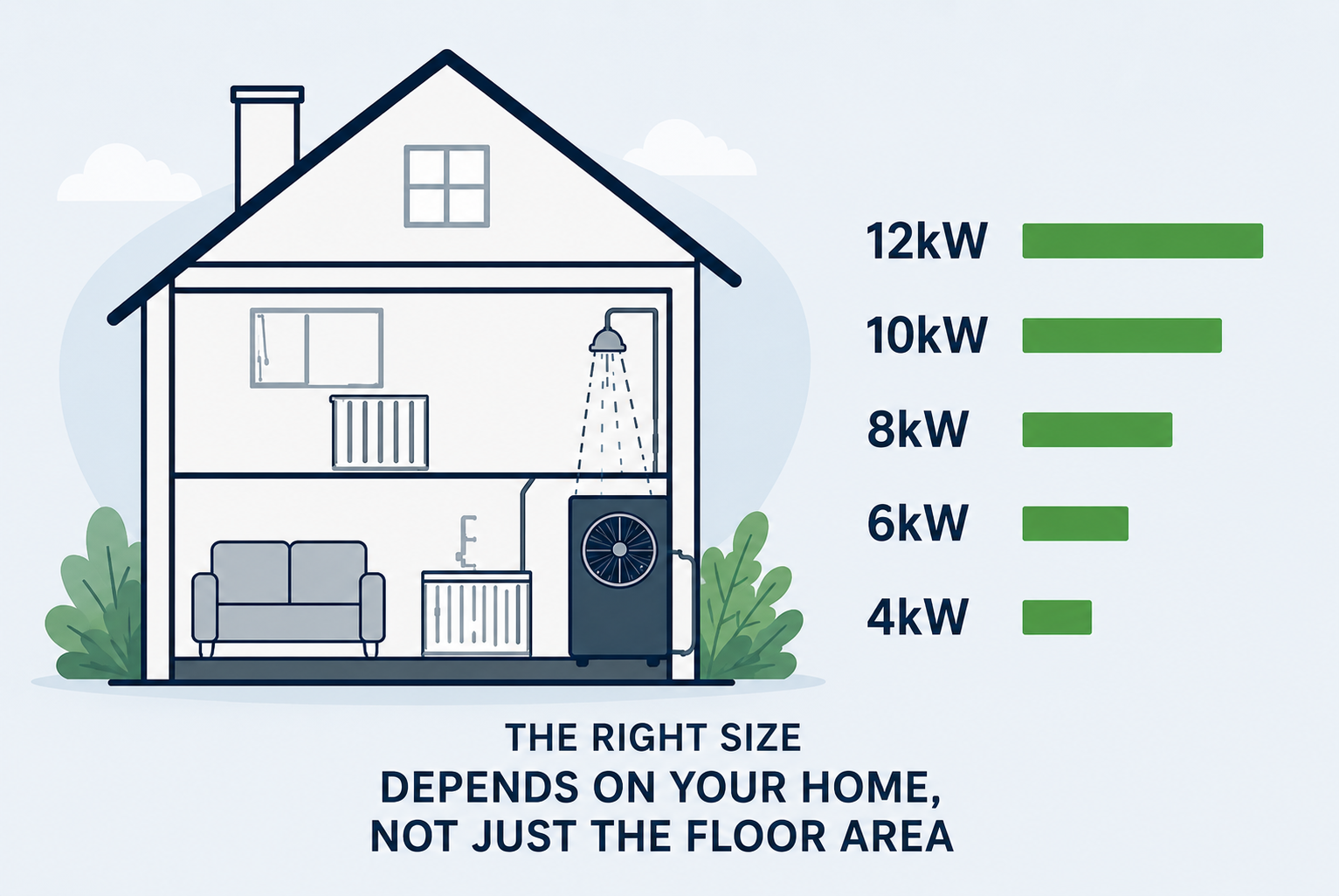
Does a Bigger Heat Pump Mean Better Heating?
Not necessarily.
It might seem logical that installing a larger system would provide more reliable heating, but oversizing isn't always the best approach.
A correctly sized heat pump is designed to meet your property's heating demand without unnecessarily increasing the installation cost or compromising efficient operation. Equally, choosing a system that is too small could leave it working harder to meet demand during particularly cold periods.
It's not about choosing the biggest heat pump. It's about choosing the right one.
Will You Need New Radiators?
Your existing heating system is another important consideration.
Heat pumps generally operate at lower flow temperatures than traditional gas boilers. This means your current radiators may need to be assessed to determine whether they can provide sufficient heat.
Some homes may benefit from larger or more suitable radiators, while others may be able to continue using their existing system. There is no one-size-fits-all answer, which is why a proper property assessment is important.
What About Older Homes?
Having an older property doesn't automatically mean you need a larger heat pump. However, older homes can sometimes have greater heat loss due to factors such as insulation, windows and building construction.
Improving insulation or upgrading certain parts of the heating system may therefore be more appropriate than simply increasing the heat pump size. A professional assessment can identify where improvements may be worthwhile.