
Maximise Your Heat Pump’s Performance: Why Insulation Matters
Air source heat pumps are increasingly popular with UK homeowners looking to cut heating bills and reduce their carbon footprint. They’re efficient, eco-friendly, and perfect for modern homes. But even the best heat pump can’t perform at its full potential if your home struggles to hold on to heat. That’s where insulation comes in — it’s the key to helping your system work smarter, not harder.
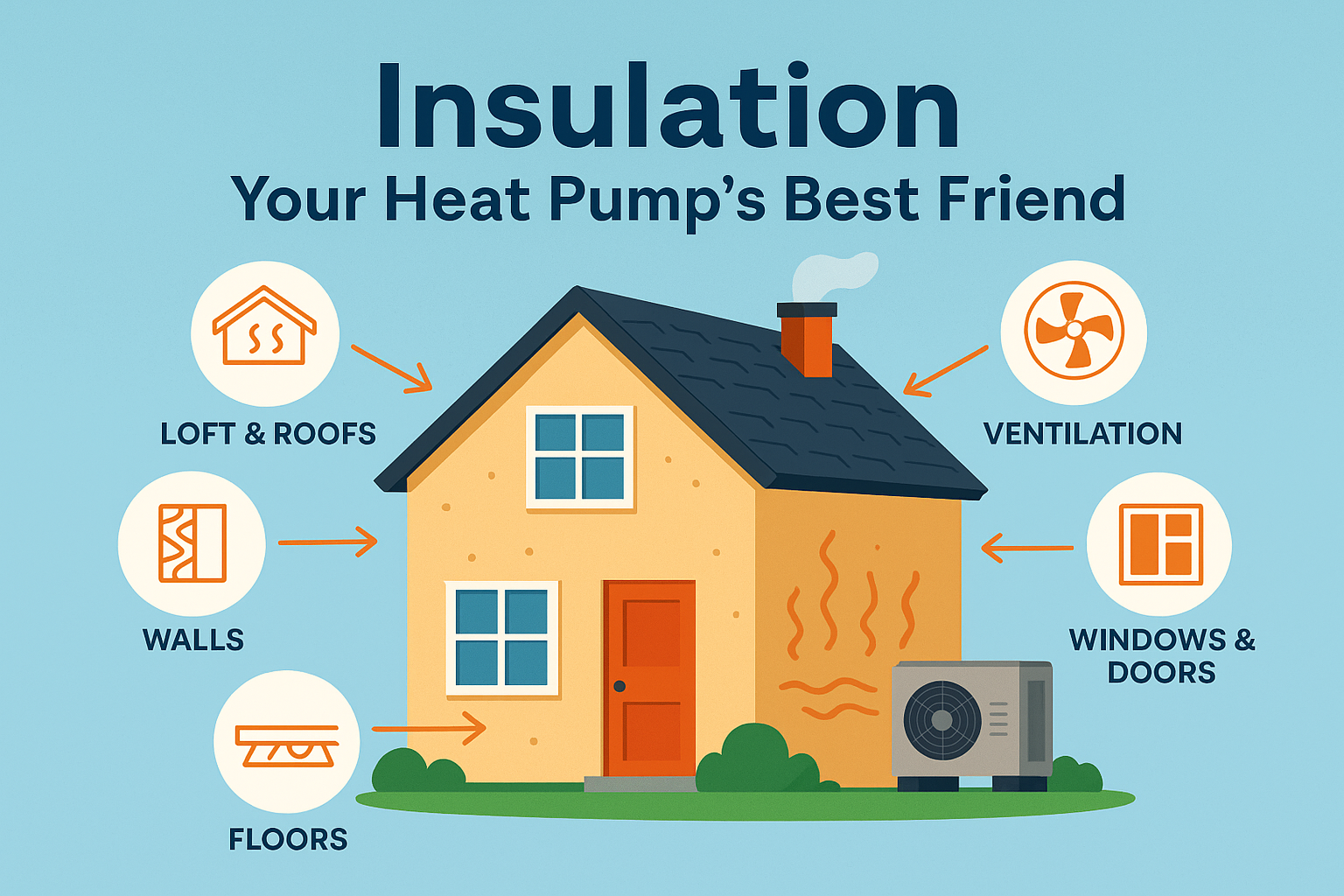
Why Insulation Makes a Difference
Unlike traditional gas or oil boilers, heat pumps provide a steady, gentle heat rather than quick bursts of very hot air. This method is highly efficient, but it only works if your home can retain warmth.
Without proper insulation, heat escapes faster than your pump can replace it. That means your system runs longer, uses more electricity, and your rooms still feel cold. Good insulation keeps warmth inside, helping your heat pump maintain a comfortable temperature with minimal effort — and lower energy bills.
Loft and Roof Insulation
A significant portion of heat — up to a quarter in some homes — can escape through the roof. Upgrading loft insulation is one of the easiest and most cost-effective ways to boost heat pump efficiency.
Whether you opt for mineral wool, rigid boards, or spray-foam insulation, the aim is the same: stop heat from escaping. For homes with pitched or flat roofs, professional installation ensures your insulation meets modern building standards and gives your heat pump the best chance to perform at its peak.
If you’re thinking of installing a new heat pump, we can advise on the best insulation approach for your loft as part of our Heat Pump Installation service.
Wall Insulation
Walls are another major source of heat loss, especially in older homes. The best solution depends on your property:
- Cavity walls – usually insulated by injecting material into the gap.
- Solid walls – often benefit from internal insulated boards or external cladding.
Although wall insulation is a bigger investment, it dramatically reduces the workload on your heat pump, helping your home stay cosy and your system run efficiently.
Floor Insulation
Cold floors can make a room feel chilly, even if the air is warm. Suspended timber floors can be insulated with mineral wool or rigid boards underneath, while concrete floors often benefit from insulation installed during renovations or when laying new flooring.
Even small measures like sealing gaps around skirting boards can make a noticeable difference.
Windows, Doors and Ventilation
Draughty windows and poorly sealed doors let heat escape quickly. Double or triple glazing, insulated doors, and simple draught-proofing strips all help your heat pump work more efficiently.
Good ventilation is also important. Mechanical ventilation with heat recovery (MVHR) balances airtightness with fresh air, keeping your home healthy and warm.
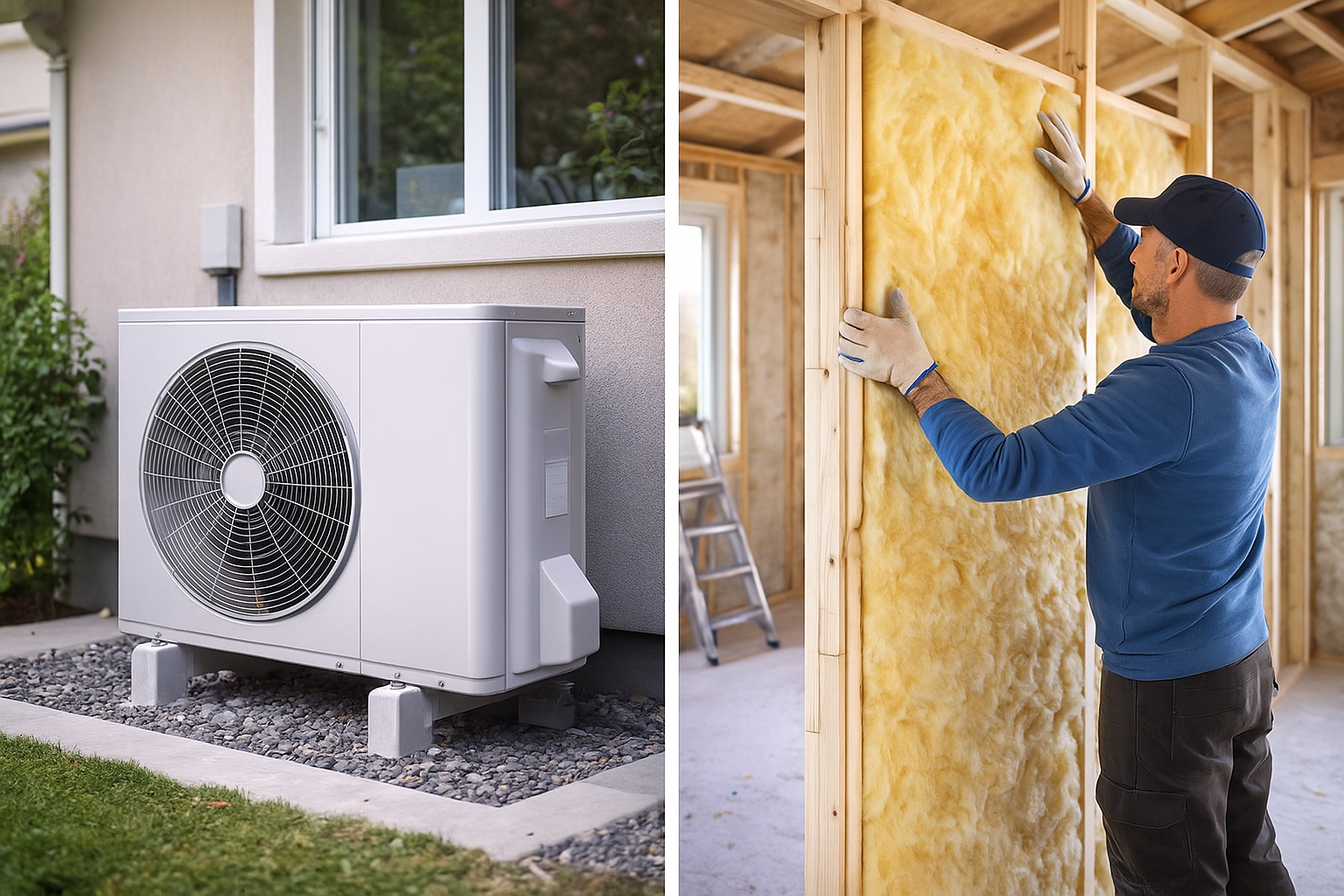
Insulation is the foundation of any efficient heat pump system. Improving lofts, walls, floors, windows, and doors helps your system work at its best, keeps your home warmer, and reduces running costs.
If you’re planning to install, upgrade, or maintain an air source heat pump, Wimbledon Heat Pumps can guide you through the process, ensuring your home is insulated correctly and your system performs at maximum efficiency.